
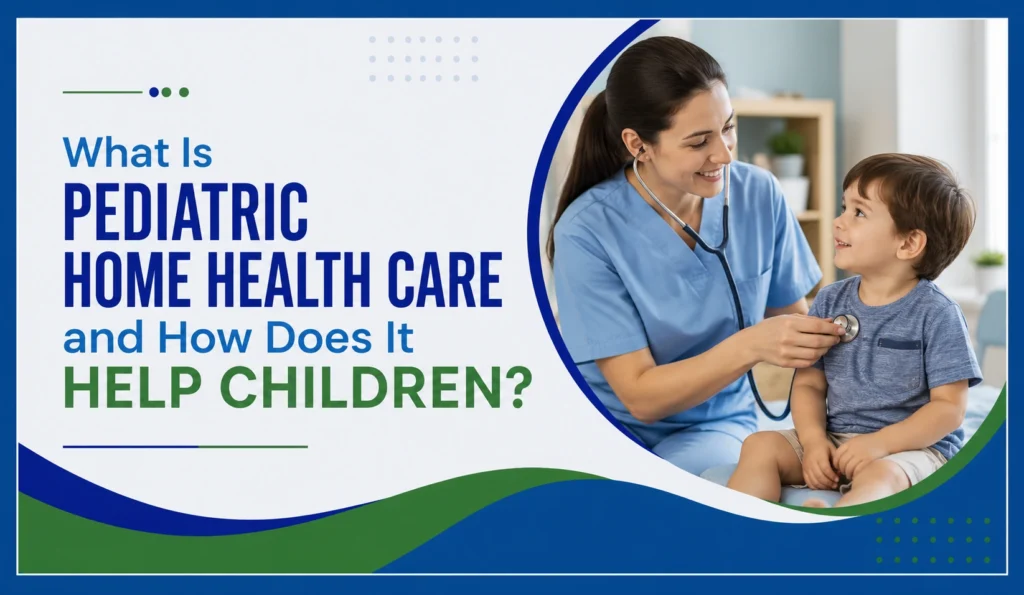
When a child needs ongoing medical attention, specialized support, or help managing a health condition, parents often have questions about the best way to provide care. Frequent hospital visits and long appointments can disrupt family routines, school schedules, and opportunities for children to enjoy everyday activities. For many families, pediatric home health care can offer a practical way to coordinate appropriate healthcare support in a familiar environment.
Pediatric home health care focuses on meeting children’s healthcare needs at home when medically appropriate. Depending on a child’s condition, care plan, and eligibility, services may involve skilled nursing, assistance with prescribed treatments, monitoring of certain health conditions, or support following a hospital stay. The type and frequency of care depend on an individual assessment and the services available through the healthcare provider.
For parents exploring pediatric home health care in Fredericksburg, Virginia, understanding how these services work can make it easier to discuss options with a child’s doctor and identify suitable support. Home-based care may help families manage complex routines, communicate with healthcare professionals, and maintain greater consistency in a child’s daily life.
In this guide, we explain what pediatric home health care is, which children may benefit, what services may be available, how families can prepare, and what parents should consider when choosing a provider.
What Is Pediatric Home Health Care?
Pediatric home health care is healthcare delivered to children in their homes by qualified healthcare professionals according to an appropriate care plan. It may be recommended for children recovering from illness, living with chronic health conditions, requiring skilled nursing, or needing continued support after hospital discharge.
Unlike routine childcare or general babysitting, pediatric home health care addresses healthcare needs that require appropriate training, clinical judgment, or medical supervision. The care provided depends on the child’s diagnosis, functional needs, provider capabilities, and the instructions established by the treating healthcare team.
For example, a child who has recently returned home from a hospital may need help following a prescribed treatment plan. Another child with a long-term medical condition may require regular nursing support and coordination with healthcare professionals. Some children need short-term assistance during recovery, while others may need ongoing care.
Pediatric home health care is designed around the child’s individual circumstances. Depending on the care plan, the goals may include supporting recovery, helping manage symptoms, promoting safety, and enabling the child to participate in family life as comfortably as possible.
Families can explore the broader range of home healthcare services offered by Fildes Healthcare to learn about available care options.
How Does Pediatric Home Health Care Help Children?
Pediatric home health care can support children and families in several important ways. The benefits depend on the child’s medical needs, the type of service provided, and the quality of coordination between the family and healthcare professionals.
Supports Care in a Familiar Environment
Children may feel more comfortable in their own homes, surrounded by familiar belongings, family members, and established routines. Receiving appropriate healthcare at home can reduce some of the disruption associated with repeated travel to healthcare facilities.
A familiar environment may also help parents participate more directly in daily care and communicate their child’s preferences, routines, and needs to the care team.
However, home care is not suitable for every condition. Children who require emergency treatment, continuous hospital monitoring, or specialized hospital-based interventions must receive care in an appropriate medical setting.
Helps Manage Ongoing Health Conditions
Some children live with conditions that require regular monitoring, treatment, or coordination among healthcare professionals. Depending on the child’s medical needs and prescribed care plan, pediatric home health care may help families follow established routines and identify concerns that require medical attention.
Qualified professionals may provide services within their scope of practice, document relevant observations, and communicate changes to the child’s healthcare team.
Home-based support does not eliminate the need for medical appointments. Instead, it may complement the child’s ongoing relationship with doctors, specialists, therapists, and other healthcare professionals.
Supports Recovery After Hospital Discharge
Returning home after a hospital stay can be a major transition for a child and their family. Parents may need to understand medication instructions, follow-up appointments, wound-care directions, activity restrictions, or other recommendations.
When ordered and appropriate, home health services can help families carry out parts of the discharge plan and understand when to contact the healthcare team.
Before discharge, parents should ask which services are needed, who will provide them, how often visits will occur, and whom to contact if the child’s condition changes.
Encourages Age-Appropriate Daily Routines
Children benefit from predictable routines that support rest, learning, play, social interaction, and family relationships. When appropriate home health services are coordinated with these routines, families may find it easier to balance healthcare needs with everyday activities.
Care planning should consider the child’s age, developmental stage, communication preferences, and comfort. The goal is to provide necessary support without unnecessarily limiting opportunities for independence and participation.
Provides Parents With Practical Guidance
Caring for a child with complex health needs can involve learning unfamiliar procedures and managing multiple appointments. Depending on the provider’s role and the care plan, healthcare professionals may help parents understand prescribed routines, recognize warning signs, and know when to seek further medical advice.
Parents should receive clear instructions about which tasks they can safely perform, which require a trained professional, and which symptoms need urgent attention.
This guidance can help families feel more prepared to manage daily responsibilities while remaining connected to the child’s healthcare team.
Helps Coordinate Communication
A child’s care may involve pediatricians, specialists, nurses, therapists, school personnel, and family caregivers. Clear communication helps ensure that everyone understands the care plan and their responsibilities.
With appropriate consent and authorization, home health professionals may communicate relevant observations to the treating team, document care, and help families understand follow-up instructions.
Good coordination is especially important when a child has several healthcare needs or receives services from multiple providers.
Which Children May Benefit From Pediatric Home Health Care?
Pediatric home health care may be appropriate for children whose medical needs can be safely managed at home with the right professional support. Eligibility depends on the child’s condition, the services required, clinical recommendations, and applicable coverage rules.
Children who may be considered for home-based healthcare include:
Children recovering from surgery or serious illness: Some may need prescribed nursing services or assistance following discharge.
Children with chronic health conditions: Certain long-term conditions require regular monitoring, treatment, or coordination.
Children with complex medical needs: Some children need specialized nursing support based on their individual care plans.
Children who require prescribed medical treatments: Certain treatments may be provided at home when ordered, clinically appropriate, and supported by a qualified provider.
Children with significant developmental or physical support needs: Some may benefit from healthcare services that address specific medical requirements alongside their daily routines.
Children transitioning from hospital to home: A coordinated discharge plan may include home health services when medically appropriate.
Having a diagnosis does not automatically mean a child qualifies for home health care. The treating clinician and provider must determine what services are needed and whether they can be delivered safely at home.
Parents in Fredericksburg, Virginia, can begin by discussing their child’s needs with the pediatrician or hospital discharge team and reviewing relevant home health care services in Fredericksburg.
What Services May Pediatric Home Health Care Include?
Pediatric home health care is not a single service. It may include different forms of professional support depending on the child’s needs and the provider’s capabilities.v
Skilled Nursing Care
Skilled nursing involves healthcare services that require professional nursing knowledge and training. Depending on the child’s prescribed care plan, this may include clinical assessments, monitoring, certain treatments, or other nursing interventions within the professional’s scope of practice.
A child with complex medical needs may require a specific level of nursing support. Families should confirm that a provider has the appropriate qualifications, experience, staffing, and capacity to meet those needs.
Learn more about private duty nursing in Fredericksburg to explore a related form of individualized nursing support.
Monitoring and Following a Care Plan
Some children require ongoing observation or structured care routines. Depending on the care plan, a healthcare professional may monitor relevant symptoms, document findings, and report concerns to the treating clinician.
Parents should understand which changes can be monitored at home, what needs to be reported promptly, and what requires emergency care. Home health professionals do not replace the child’s doctor or independently change prescribed treatment without appropriate authorization.
Medication-Related Support
Medication routines can be challenging when a child has several prescriptions or requires carefully timed doses. Depending on the service, professional qualifications, and applicable rules, home health care may include medication-related tasks authorized by the care plan.
Parents should maintain an accurate medication list and follow the prescribing clinician’s instructions. They should never change a child’s dose, stop a prescribed medication, or begin a new treatment without appropriate medical guidance.
Support After Hospitalization
Some children need help transitioning from hospital care to their home environment. Depending on the discharge plan, home health professionals may assist with prescribed care tasks, reinforce instructions, observe recovery, and communicate concerns to the healthcare team.
Before services begin, families should confirm the expected start date, visit schedule, equipment needs, and emergency contact process.
Therapy and Developmental Support
Certain children may benefit from physical, occupational, or speech-language therapy at home when these services are prescribed and available. Therapy can address goals such as mobility, communication, daily activities, or functional skills.
Not every home health provider offers every therapy. Parents should ask which disciplines are available, whether a referral is required, and how progress will be evaluated.
Education for Family Caregivers
Caregiver education may be an important part of a child’s home care plan. Qualified professionals can explain relevant procedures, demonstrate approved techniques, and help parents understand safety precautions.
Training should be specific to the child’s needs and delivered by appropriately qualified personnel. Families should never be expected to perform unfamiliar medical procedures without suitable instruction and authorization.
Pediatric Home Health Care vs Private Duty Nursing
The terms pediatric home health care and private duty nursing are related, but they do not always mean the same thing.
Pediatric home health care is a broad term for healthcare services delivered to children at home. Depending on the provider, this may include nursing, therapy, and other clinically appropriate services.
Private duty nursing generally refers to individualized nursing care delivered for an agreed period or schedule. It may be considered for children who need a higher level of ongoing nursing attention, including some children with complex medical conditions.
The most appropriate option depends on the child’s medical requirements and the services prescribed or recommended by the healthcare team.
| Consideration | Pediatric Home Health Care | Private Duty Nursing |
|---|---|---|
| General purpose | Broad range of eligible healthcare services at home | Individualized nursing support |
| Services | May include nursing and therapy, depending on the provider | Nursing services based on the child’s care plan |
| Schedule | Depends on the ordered service and provider availability | Depends on assessed needs, authorization, and staffing |
| Clinical oversight | Follows the applicable care plan and clinical requirements | Follows the nursing care plan and professional requirements |
| Best next step | Ask the healthcare team which services are appropriate | Ask whether the child’s nursing needs warrant individualized nursing care |
These categories can overlap. A child’s actual services, staffing, schedule, and eligibility should be confirmed with the treating clinician and provider.
To understand whether individualized nursing may be suitable, visit Fildes Healthcare about private duty nursing services in Fredericksburg.
How to Choose a Pediatric Home Health Care Provider
Choosing a provider requires more than comparing availability. Parents should confirm that the organization can safely meet their child’s specific needs and communicate clearly with the family.
Check Licensing and Professional Qualifications
Ask about the organization’s licensing and regulatory status, as applicable, and verify the qualifications of the professionals who will provide care. Confirm that staff have the training and experience relevant to the child’s medical requirements.
For children with complex conditions, ask specifically about the provider’s experience with comparable care needs.
Confirm That the Required Services Are Available
Not every agency provides every pediatric service. Before starting care, describe the child’s needs and ask whether the provider can deliver the required services, equipment support, and schedule.
Confirm any limits on services, geographic coverage, and staffing availability.
Ask About the Assessment and Care Plan
A reliable care process should identify the child’s needs, establish appropriate goals, explain the planned services, and clarify how care will be reviewed.
Ask who develops the care plan, how changes are handled, and how parents can contact the care team with questions.
Understand Staffing and Continuity
Children may benefit from familiar caregivers and consistent communication. Ask how staffing is arranged, what happens if a scheduled professional is unavailable, and how the provider manages urgent staffing gaps.
For ongoing care, families should understand who supervises the professionals delivering services and how concerns are escalated.
Discuss Costs and Insurance Coverage
Coverage varies by service, medical necessity, insurance plan, authorization requirements, and other eligibility criteria. Some services may be covered under qualifying plans, while others may require private payment.
Before care begins, ask for a written explanation of anticipated costs, covered services, authorization requirements, and any financial responsibilities. Do not assume that a service is covered simply because a child has a medical diagnosis.
Review Communication and Safety Procedures
Parents should know how to contact the provider during scheduled care and outside normal business hours, when applicable. Ask how incidents are documented, how changes in condition are reported, and what procedures apply in an emergency.
A clear communication process is essential for maintaining continuity and responding appropriately when a child’s needs change.
What Should Parents Prepare Before Home Health Care Begins?
Preparing for the first visit can help the family and care team establish a clear, organized plan.
Consider preparing the following information:
Medical history: Include relevant diagnoses, recent hospitalizations, allergies, and important clinical information.
Medication list: Record current prescriptions, doses, schedules, and relevant instructions.
Healthcare contacts: Provide the pediatrician’s and specialists’ contact details, along with the appropriate emergency contacts.
Discharge instructions: If the child recently left the hospital, gather written instructions and follow-up recommendations.
Care goals: Explain what the family and treating clinician hope the services will help accomplish.
Daily routines: Share relevant information about meals, sleep, school, communication, comfort, and activities.
Home environment: Discuss access, safety considerations, medical equipment, and any practical arrangements required for care.
Questions and concerns: Write down anything that needs clarification before services begin.
Parents should also confirm the visit schedule, the professional’s role, the tasks included in the service agreement, and the process for reporting concerns.
Pediatric Home Health Care in Fredericksburg, Virginia
Families in Fredericksburg, Virginia, may be looking for home-based healthcare options that fit a child’s medical needs and the family’s daily schedule. The first step is to determine which services are clinically appropriate and whether a qualified local provider can deliver them.
When evaluating pediatric home health care in Fredericksburg, parents should consider professional qualifications, the type of nursing or therapy required, care coordination, service availability, costs, and communication procedures.
It is also important to distinguish routine home health support from urgent medical care. A child who has difficulty breathing, becomes unresponsive, experiences a seizure that requires emergency attention, or shows another sign of a medical emergency needs immediate emergency assistance. Families in the United States should call 911 when appropriate rather than waiting for a scheduled home health visit.
For non-emergency needs, parents can discuss referrals and care options with the child’s pediatrician, hospital discharge team, or qualified healthcare provider.
Fildes Healthcare provides information about its home healthcare services. Families can review its Fredericksburg home health care information and contact the organization to ask whether the services they need are available for their child’s circumstances.
Because pediatric needs vary considerably, parents should confirm service availability, clinical suitability, staffing, and eligibility directly with the provider before making arrangements.
Frequently Asked Questions
What Is Pediatric Home Health Care in Simple Terms?
Pediatric home health care is healthcare provided to children in their homes when their medical needs can be managed safely in that setting. Depending on the child’s care plan, it may include skilled nursing, certain treatments, monitoring, or therapy. Services should be delivered by appropriately qualified professionals.
What Children Need Pediatric Home Health Care?
Children may be considered for home health services when they need professional support following hospitalization, have certain chronic conditions, require skilled nursing, or need prescribed care that can safely be delivered at home. Eligibility depends on medical necessity, the care plan, provider capabilities, and applicable coverage requirements.
What Are the Benefits of Pediatric Home Health Care?
Potential benefits include receiving appropriate care in a familiar environment, supporting recovery after hospitalization, helping families follow prescribed care routines, and improving communication between caregivers and healthcare professionals. Benefits vary according to the child’s needs and the services provided.
Is Pediatric Home Health Care the Same as Childcare?
No. Childcare primarily focuses on supervision and everyday care. Pediatric home health care addresses healthcare needs that require qualified clinical services or other support specified in an appropriate care plan. Families should confirm exactly which tasks are included in a provider’s services.
Can Pediatric Nurses Provide Care at Home?
Qualified pediatric or other appropriately licensed nurses may provide home-based nursing services when the child’s needs, care plan, professional scope, and provider arrangements allow it. Parents should ask about the nurse’s qualifications and experience with the child’s specific condition.
Is Pediatric Home Health Care Available After a Hospital Stay?
It may be available when the treating healthcare team determines that home-based services are appropriate and a qualified provider can meet the child’s needs. Families should coordinate with the discharge team to arrange referrals, orders, equipment, and follow-up care as needed.
Does Insurance Cover Pediatric Home Health Care?
Coverage depends on the insurance plan, medical necessity, the service requested, authorization requirements, and applicable eligibility rules. Parents should contact their insurer and the provider to confirm benefits, required documentation, possible out-of-pocket costs, and whether the proposed services are covered.
How Do I Find Pediatric Home Health Care in Fredericksburg, VA?
Start by asking the child’s pediatrician or hospital discharge team for recommendations and referrals. Then contact qualified providers in Fredericksburg, Virginia, to verify pediatric service availability, professional qualifications, scheduling, costs, and whether they can meet the child’s specific care needs.
Understanding Pediatric Home Health Care
Pediatric home health care can be an important option for families whose children need professional healthcare support in a familiar home environment. Depending on the child’s medical needs, services may help with recovery after hospitalization, ongoing nursing requirements, prescribed treatments, care coordination, and communication with healthcare professionals.
The most appropriate care plan begins with an assessment of the child’s needs and guidance from the treating healthcare team. Parents should verify provider qualifications, available services, scheduling, costs, and safety procedures before starting care.
For families exploring pediatric home health care in Fredericksburg, Virginia, learning about local services is a useful first step. Fildes Healthcare offers information about its home healthcare services and Fredericksburg home health care options. You can also contact Fildes Healthcare to ask about service availability and discuss whether its offerings align with your family’s needs.
Every child has different healthcare requirements. With appropriate professional guidance, a clear care plan, and open communication, families can make more informed decisions about the support that may be suitable for their child.